



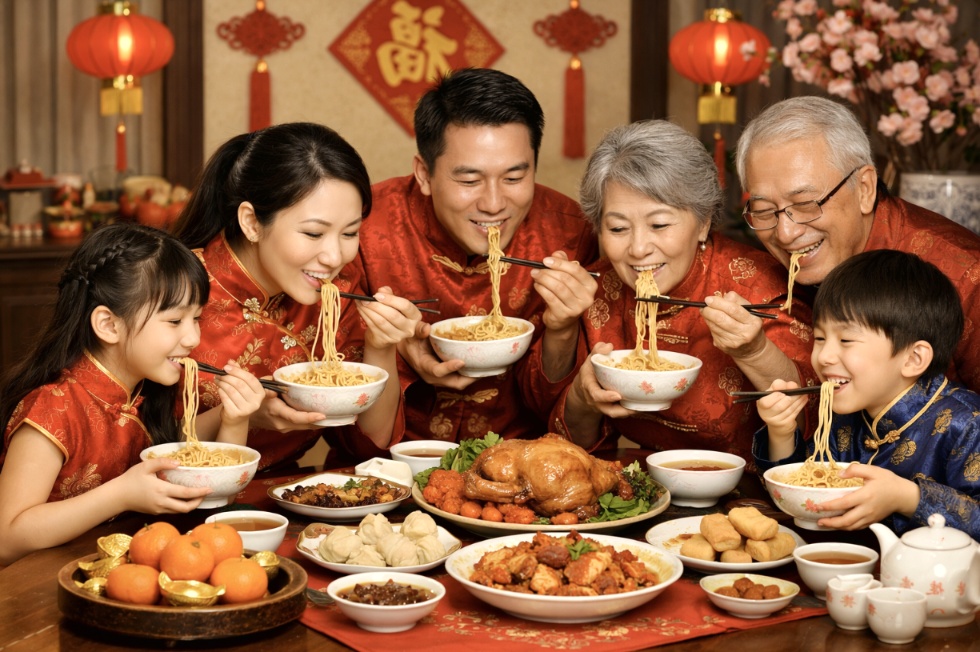

Philosophy – Amid the vibrant celebrations of Chinese New Year, one dish remains ever-present on the family table: longevity noodles. Far more than a culinary tradition, these noodles symbolize one of the oldest and most profound prayers for long life, good health, and lasting prosperity.
Each strand of longevity noodles is served long and unbroken, reflecting the belief that length represents the continuity of life. Cutting the noodles is traditionally avoided, as it is thought to disrupt the flow of longevity and fortune. As a result, both the preparation and consumption of this dish are carried out with great care and reverence.
Historically, longevity noodles trace their roots back to China’s Han Dynasty (206 BCE–220 CE), where they were featured prominently in birthday banquets honoring elders. Over time, the practice expanded to weddings and eventually became a symbolic staple of Lunar New Year celebrations.
The symbolism extends beyond the noodles themselves. Toppings and accompaniments carry their own meanings: eggs represent rebirth and new beginnings, green vegetables such as bok choy signify vitality and health, while meat and seafood symbolize abundance and prosperity. Together, they embody the ideal of a balanced and fulfilling life.
A popular legend links longevity noodles to Peng Zu, a mythical figure believed to have lived for over 800 years. According to folklore, his longevity stemmed from a nutritious and disciplined diet that included long, uncut noodles further embedding their association with extended life.
This tradition is not confined to China alone. In Japan, Toshikoshi Soba is consumed on New Year’s Eve to mark the transition into a fortunate year ahead. Similar customs exist in Korea and Indonesia, each adapted to local tastes yet united by the same wish: a long, healthy, and blessed life.
In modern times, longevity noodles are also appreciated for their nutritional value. Made from natural ingredients and paired with fresh vegetables, they are believed to boost energy and overall well-being.
Their carbohydrate content provides sustained energy, making them both symbolic and nourishing.
Ultimately, longevity noodles transcend their role as festive food. They are a prayer served in a bowl, a testament to patience, hope, and respect for ancestral traditions binding generations together as each new year begins with optimism and unity.***